When “Cloud” Infrastructure Fails: Lessons from the Cloudflare OutageWhen “Cloud” Infrastructure Fails: Lessons from the Cloudflare Outage


On November 18, 2025, the digital world experienced something that, for many users, was just a fleeting moment—but for companies, brands, and the entire process of managing the internet, it served as a warning. Cloudflare, a company that handles a significant portion of internet traffic and security infrastructure, suffered a global outage. Hundreds of websites, thousands of applications, and millions of users felt its effects.
This wasn’t just a technical incident; it was a moment worth reflecting on: just how dependent we are on technology, and what it means for us when it fails.
Cloudflare—what exactly happened?

Here are the key facts regarding the Cloudflare outage:
- The problems began around 11:20 UTC, when Cloudflare noticed “significant issues with network traffic delivery.”
- The company indicated that the cause was a change in permissions in one of its database systems, which triggered the generation of a configuration file (“feature file”) for the Bot Management system, which grew far beyond its expected size and led to a failure in the traffic management software.
- Cloudflare emphasized that no external attack was detected—it was an operational/infrastructural error.
- Popular platforms were affected by the outage, including ChatGPT, X (formerly Twitter), e-commerce apps and websites, and remote work tools.
- Although the main outage was resolved within a few hours, the effects lingered longer—there were difficulties with logging in, accessing dashboards, and performance drops.
We’ve already written about the usefulness of ChatGPT in marketing on our blog -> ChatGPT in Marketing. How can you use it?
User reactions—what people were saying on forums about the Cloudflare situation

Numerous comments regarding the situation at Cloudflare appeared on technical forums, clearly illustrating the scale of the situation and its social impact. Here are a few selected comments:
“I didn’t realize how many websites use Cloudflare until today.” — a user on r/sysadmin.
“Cloudflare just went offline globally and it’s taking half the internet with it.” — excerpt from a discussion on r/CloudFlare.
“From what I can gather, that unwrap wasn’t the root cause of this problem. Rather, it was the end of a chain of cascading failures.” – a user on r/rust, referring to the technical causes.
These comments show that—while for many it may have been just “the site isn’t working”—for those working with internet infrastructure, it was a moment of reflection: “How many layers are we sitting on? What are our critical points?”
What were the consequences of the Cloudflare outage?
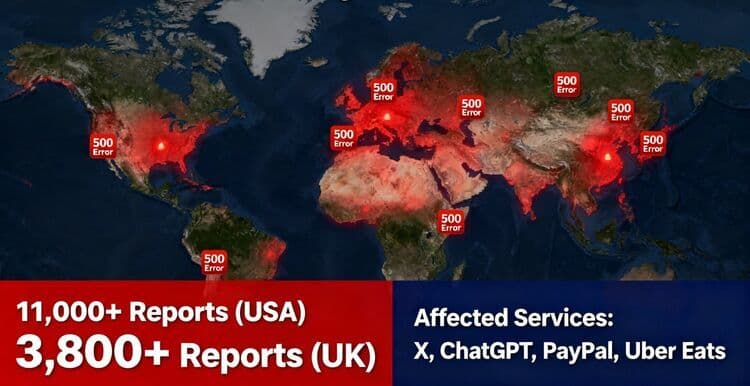
The Cloudflare outage had several dimensions—technical, business, and psychological:
Technical Vulnerability
When a key infrastructure provider fails, even well-designed websites may go down. For companies, this means: a Plan B, redundancy, and disaster recovery testing.
Business risk
The loss of access to online tools can mean downtime—in e-commerce, customer communication, internal processes, and remote work. For a brand, this can result in reputational damage.
The Psychological Dimension of the Cloudflare Outage
For ordinary users, this is a moment of realization that “the internet works” not because it always works—but because the entire complex network is running smoothly in the background. When something fails, we feel disoriented.
A Social Impulse for Reflection
Are we too complacent? Have we placed too much trust in technology? An outage reveals this dependence—and raises questions about our preparedness for moments when technology fails.
Human dependence on technology
In this context, it’s worth looking at this from a slightly different perspective—that of reflection. Imagine that in the day-to-day operations of your brand or company, technology is like oxygen: unnoticed as long as you’re breathing, but when it’s gone—you feel it. The Cloudflare outage cut off the “breath” of part of the internet.
The boundary between the real world—meetings, conversations, work—and the online world—communication, apps, services—didn’t shift dramatically; it simply warped. The rhythm of life was temporarily disrupted.
As a brand or marketing agency, it’s no longer enough today to simply say “be online.” We must ask: What will happen when this network ceases to be omnipotent? And how can we safeguard communication, user experience, and user trust when this technological “breath” is interrupted?
The Cloudflare incident prompts reflection—what can brands and companies do?
- Have a contingency plan in place—which services can continue to function if your primary infrastructure provider fails?
- Focus on crisis communication—short, clear messages stating that you’re working to restore service build trust.
- Monitor your dependency structure—does your website, online store, or app rely on a single point of failure? Diversification can mean lower risk.
- Internal and customer education—showing that technology is not just a “tool” but a foundation—builds awareness and lasting relationships.
- Improving technical processes—the Cloudflare outage showed that even infrastructure leaders have critical moments. Testing, scenario planning, and stress tests are essential today.
The Cloudflare Situation—A Summary
The Cloudflare outage was a source of frustration for many—but for those who design brands, run campaigns, and manage online services, it’s a wake-up call. It showed that the internet and online services are not a fairy tale of endless operation, but a complex mechanism dependent on many layers.
In a world where technology is becoming the backbone of our lives, it’s worth remembering: dependence on it doesn’t have to mean helplessness—if we’re aware that this dependence exists, we can shape it and protect ourselves against it.
Brands that understand this and can combine creativity with technical resilience have the advantage today. Because even the best campaign ceases to exist if the infrastructure supporting it fails.


