Local SEO: How Can a Service-Based Business Attract Customers Through Google?


For many service-based businesses, the most valuable customer isn’t looking for a service provider across all of Poland. They’re looking for someone nearby, checking reviews, comparing a few business listings, and wanting to quickly assess whether the company actually operates in their area. This is exactly where local SEO comes in.
Local SEO isn’t just about adding a city name to your website. It’s a combination of visibility on Google Search and Google Maps, a well-maintained Google Business Profile, local content, reviews, consistent business information, and a website that makes it easy to get in touch. When these elements work together, not only does traffic increase, but—most importantly—so does the number of phone calls, form submissions, and genuine inquiries.
Key Takeaways
- Local SEO helps service-based businesses reach users who are searching for a service in a specific city, neighborhood, or region.
- Local visibility is primarily determined by the relevance of the offering, distance from the user, and brand recognition, as well as the quality of the website, reviews, and the completeness of the Google Business Profile.
- A Google Business Profile alone isn’t enough. The best results come from a cohesive combination of the profile, website, local landing pages, reviews, and a convenient way to get in touch.
- Local SEO only makes sense when it supports real business goals: a phone call, a form submission, a quote, an appointment, or a sale.
What is local SEO, and who benefits from it the most?
Local SEO refers to activities designed to increase a business’s visibility to users searching for services in a specific location. This includes both traditional organic search results and visibility on Google Maps and in the local search results section.
This is most important for service-based businesses that serve customers in a specific area: plumbers, electricians, medical offices, law firms, renovation companies, beauty salons, repair shops, real estate agencies, marketing agencies, or teams operating across several cities.
Local SEO is particularly effective when a user has a strong intent to take action. Search queries such as “dentist in Kraków,” “mechanic in Bielsko,” “digital marketing in Katowice,” or “plumber near me” often indicate that someone isn’t looking for information, but for a solution to a problem right here and now.
What influences local visibility on Google?
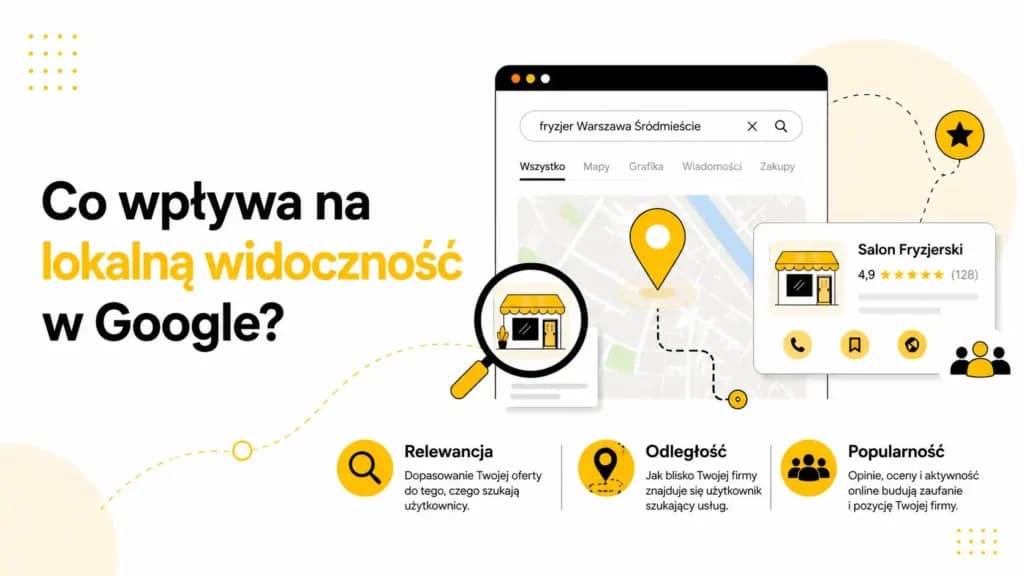
Google identifies three main factors for local rankings: relevance, distance, and reputation. In practice, this means that a business should be a good match for the search query, operate in an area relevant to the user, and inspire trust as a legitimate, active entity.
Relevance refers to how well the business profile and website match what the user is looking for. If a business clearly describes its services, categories, service area, and specialization, Google can more easily match it to local search queries.
Distance refers to the user’s physical proximity to the business or its service area. For some services, the address matters, while for businesses that operate on-site at the client’s location, a correctly defined service area and clear communication of the location on the website are key.
Recognizability is a signal that the business is legitimate and well-known. It is influenced by, among other things, reviews, backlinks to the business from other websites, profile activity, and consistent contact information. It’s not a single magic factor, but rather the result of credibility built across multiple channels.
How can you use Google Business Profile to attract customers?
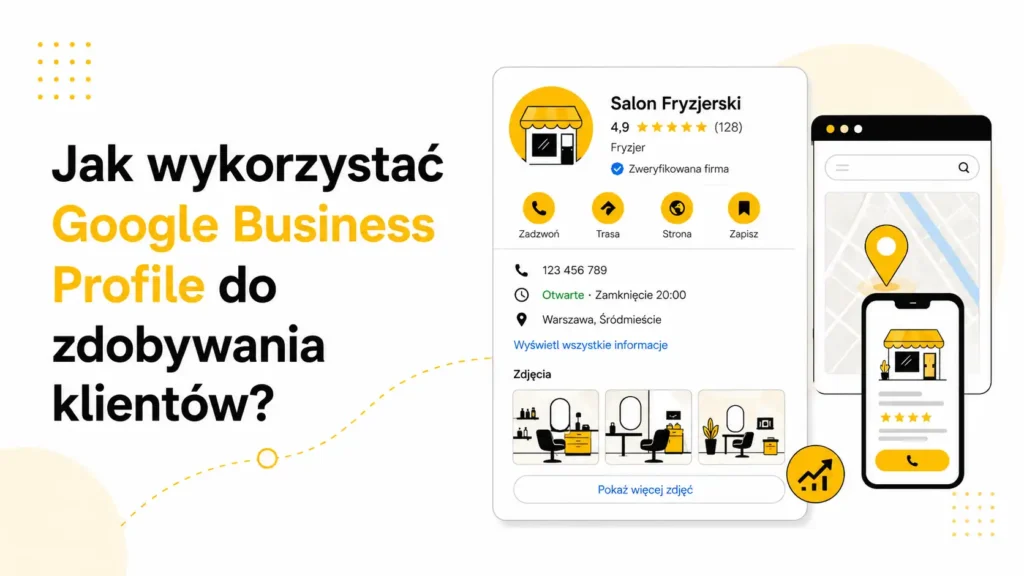
Google Business Profile is often the first point of contact with a brand. There, users see the company name, service categories, phone number, hours of operation, photos, reviews, and contact information. If the listing is incomplete or out of date, the company loses a chance even before anyone visits the site.
The foundation lies in properly verifying the profile, ensuring complete data, and updating it regularly. It’s important to select the correct primary category, include relevant secondary categories, list current hours, upload photos, provide a business description, and specify the service area.
Service-based businesses without a physical customer service location can also build local visibility. In this case, the profile should be set up as a business serving a specific area, rather than a fictitious “virtual branch.”
A business listing is not a substitute for a website. It works best when it links to a well-designed website that confirms the scope of services, locations, and makes it easy to get in touch.
What should a company website optimized for local SEO look like?
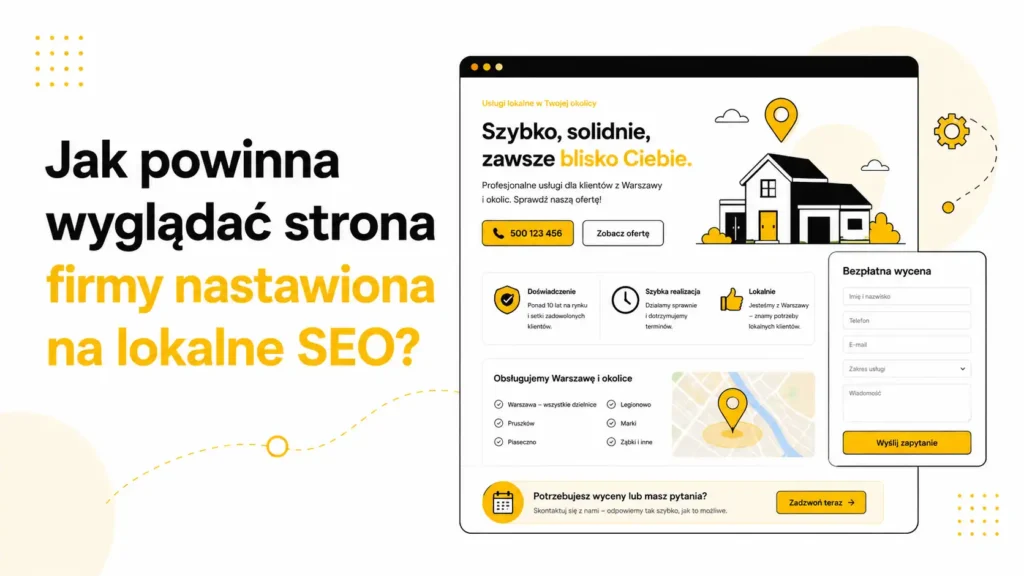
A website has two purposes: to confirm the company’s local credibility and to convert traffic into leads. That’s why simply including local keywords isn’t enough. Users should immediately see what services you offer, the area you serve, and how they can contact you.
A good local service website should include a clear service offering, an easy-to-read contact section, your location or service area, testimonials and reviews, prominent CTAs, and a user-friendly contact form. If your business serves multiple cities or regions, it’s important to describe this in a well-organized and logical manner.
The quality of the landing page is also very important. Even good visibility on Google Maps won’t yield results if a user lands on an unreadable page, can’t find a phone number, or doesn’t know whether the business operates in their area.
Is it worth creating separate subpages for cities and locations?

Yes, but only if the company actually serves that location and is able to provide useful content. Separate subpages for cities make sense if they describe the actual scope of services, travel time, availability, sample projects, or the most common customer issues in that area.
The biggest mistake is creating a dozen or so nearly identical pages with just the city name swapped out. Such content adds no local value, weakens the quality of the website, and can lead to duplication and cannibalization.
A better approach is to have fewer, stronger subpages: well-described service areas, logical linking from the main site and blog, and content that addresses users’ local search intent.
How do reviews impact local SEO and customer decisions?

Reviews serve a dual purpose. On the one hand, they strengthen the company’s credibility in the eyes of the user. On the other hand, they support local visibility because Google treats reviews as an important signal of recognition and quality.
It’s not just the number of reviews that matters. The recency of the reviews, their content, and how the business responds to them are also important. Effective communication shows that the brand is active and takes its customers seriously.
The safest way to obtain reviews is naturally: after a service has been provided, after a job has been completed, or after a customer’s issue has been resolved. Buying reviews, offering rewards for positive ratings, or artificially inflating scores is a surefire way to create reputation and quality issues.
It’s also worth responding to less favorable reviews. A calm, factual response builds trust and often says more about the company than the rating itself.
How do you link your Google profile, website, and local content?
The best local SEO isn’t about optimizing a single element, but about consistency. If your Google profile lists specific services and a location, your website must confirm this information. If a business claims to operate in several cities, users should also find this information on its service pages and in the contact section.
Consistency applies primarily to the company name, address, phone number, scope of services, and area of operation. Inconsistent data makes it harder for users to make a decision and undermines the credibility of the company’s entire Google presence.
Local content is best developed around real customer questions: Does the company serve a specific location? What does the collaboration process look like? How long does it take to complete a project? Can a consultation be scheduled? Is a quote or an on-site visit available?
How do you measure the results of local SEO?
Visibility alone isn’t enough. In local SEO, you need to measure whether the number of actions that matter to your business is growing. Most often, these will be phone calls, clicks to the website from the Google profile, submitted forms, requests for quotes, and visits to local subpages.
It’s worth analyzing data from several sources simultaneously. Google Business Profile shows basic interactions with the profile, Search Console helps assess visibility for local queries, and GA4—along with properly configured events—allows you to see which subpages and channels are actually generating leads.
A good sign of progress is not only an increase in the number of page views but, above all, an improvement in the quality of traffic. If the number of phone calls and form submissions from local subpages is growing, it means that visibility is beginning to translate into genuine interest in your offerings.
Common Mistakes in Local SEO

- An incomplete or outdated Google Business Profile.
- Inconsistencies in business information between the website and the Google Business Profile.
- Creating multiple local subpages with nearly identical content.
- Lack of clear information about the service area or scope of services.
- Ignoring feedback and failing to respond to reviews.
- Directing traffic from the business listing to a poor contact page or a generic homepage without a clear offer.
- Focusing exclusively on search rankings without tracking phone calls, form submissions, and the quality of inquiries.
Practical Example
Let’s assume that a renovation company operates in Bielsko-Biała and the surrounding areas. It has a Google profile, but it’s poorly filled out, has few reviews, and a website that generally describes its services without specifying its actual service area.
The first step shouldn’t be to mass-produce a dozen or so pages for each city. It’s better to start by organizing the business profile, refining the service offering, creating 2–3 valuable subpages for the most important locations, adding clear contact information, and collecting authentic customer reviews.
This approach usually yields better results than a haphazard approach. Google gets a more coherent picture of the business, and users can more quickly tell that they’ve found a service provider that operates in their area and can actually help them.
Expert Insight
The biggest mistake in local SEO is treating it as a simple add-on to a website. A business listing alone, a city landing page alone, or reviews alone won’t build a competitive edge if the user doesn’t receive a consistent message. Local visibility starts to work when Google and the customer see the same thing: a real business, a specific service, a defined service area, and a simple way to get in touch.
FAQ
Is local SEO only for businesses with a physical address?
No. Even businesses that serve customers on-site can build local visibility if they set up their business profile correctly and clearly describe their service area on their website.
Is a Google Business Profile enough to attract local customers?
No. The profile may be the first point of contact, but without a good website, consistent data, and a credible offering, it’s harder to convert visibility into inquiries.
Is it worth creating separate subpages for several cities?
Yes, as long as they cover locations you actually serve and contain unique, useful content. Copying the same text and just swapping out the city name usually doesn’t help.
Do reviews have a real impact on local SEO?
Yes. They support both visibility and user decisions. It’s not just the number of reviews that matters, but also their recency, quality, and how you respond to them.
How long does it take to see results from local SEO?
It depends on the competition, the industry, the quality of the website, and the status of your Google profile. Some results can be seen relatively quickly, but steady growth usually requires regular optimization.
Summary
Local SEO helps service-based businesses reach users who are close to making a decision and are looking for a service provider in a specific location. It works best when your Google profile, website, reviews, and local content reinforce each other.
If your goal is to acquire customers through Google, it’s not worth starting by artificially creating multiple pages for different cities. You’ll get much better results by organizing your business listing, refining your website, clearly defining your actual service area, and measuring what really matters for your business: phone calls, contact forms, and the quality of inquiries.


