Headless CMS Websites – Why Are They Worth It?

The internet is changing faster than we can keep up with. Just a few years ago, a simple website built on a popular CMS was enough for a company to have an online presence and reach customers. Today, however, users expect not only content, but also speed, convenience, and a consistent experience regardless of whether they’re using a smartphone, laptop, or tablet.
In this context, there’s growing buzz around a solution known as a headless CMS. This approach separates the content management system from the visual layer of the website. Sound complicated? In practice, it means greater flexibility, faster performance, and the ability to create websites that are truly future-proof.
You can compare it to a restaurant: the kitchen and the dining room are two different worlds, but together they create a cohesive experience for the guest. It’s similar with a headless CMS: content is created in the system’s “kitchen,” and how it’s presented to the user depends on modern presentation technology.
Traditional Solutions and Their Limitations

For years, WordPress was the dominant system. It’s popular, easy to use, and has a huge library of plugins. No wonder it became the top choice for millions of websites around the world. However, as user expectations grew and Google’s algorithms changed, traditional solutions began to lose their edge.
This is clearly reflected in the data. According to Google Trends, WordPress’s popularity has been steadily declining since 2015, while technologies such as React.js continue to gain prominence. React.js ranks at the top of lists of the most sought-after web technologies, as shown, for example, by stackoverflow.com.
What Sets Modern Headless CMS Websites Apart
A modern approach to website development is the headless CMS. The key difference is that content and its presentation are no longer rigidly linked.
What does this mean in practice?
- Flexibility—the same content can be displayed on a website, in a mobile app, or on various devices.
- Speed – separating content from the visual layer makes the site load faster and handle high traffic better.
- Security—fewer “entry points” for attacks, since content and visuals are separate elements.
- Stability – a failure in one component does not bring the entire site down.
As a result, a headless CMS gives companies what they need most in the digital world: scalability, performance, and reliability.
Why React and Next.js Are the Future of Websites
Modern websites need technology that not only ensures fast performance but also allows for flexible development and an attractive design. That’s why React and its extension, Next.js, are increasingly being chosen around the world.
These aren’t just buzzwords for developers. React and Next.js are tools that address very specific business needs:
- Speed – websites built with this technology load instantly, which is crucial for both users and Google rankings.
- Reliability – a website built from many independent components operates stably; even if something stops working in one section, the rest of the site continues to function without interruption.
- A modern approach to content – ISR (Incremental Static Regeneration) technology ensures that content updates occur quickly without the need to rebuild the entire site. This translates to real time savings and greater efficiency for marketing teams.
- A top-notch user experience—React allows for the implementation of modern animations, smooth transitions, and dynamic solutions that make using the site enjoyable and intuitive.
It’s no coincidence that global brands serving millions of users every day—including Facebook, Instagram, Netflix, Airbnb, and PayPal—use React. These companies chose React because it ensures reliability and performance even under heavy traffic.
Performance and SEO – A Competitive Edge on Google
Today, website speed is not just a matter of user convenience. It’s also one of the key factors that determine how high your site ranks in Google search results.
Starting in May, Google introduced a set of guidelines called Web Vitals. They evaluate, among other things:
- page load time,
- stability of element rendering (so nothing “jumps” when scrolling),
- responsiveness and interactivity (how quickly you can click and use the site).
Why is this so important? Because websites that meet these requirements are prioritized in search results. This means that a fast, stable, and well-optimized website has a better chance of ranking higher than the competition.
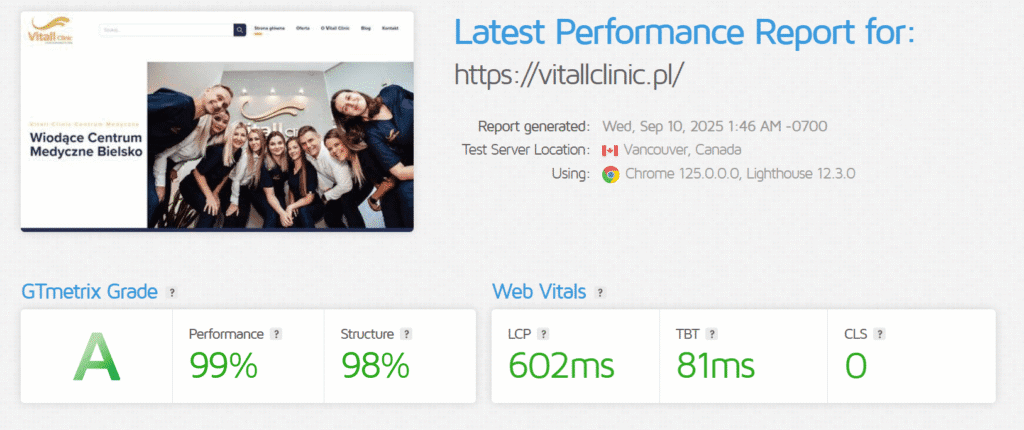
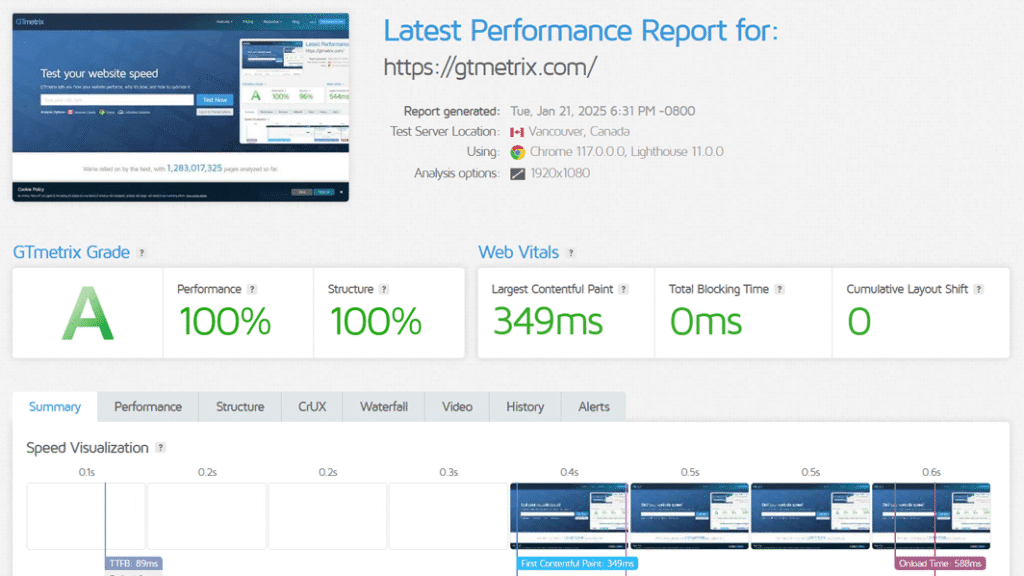
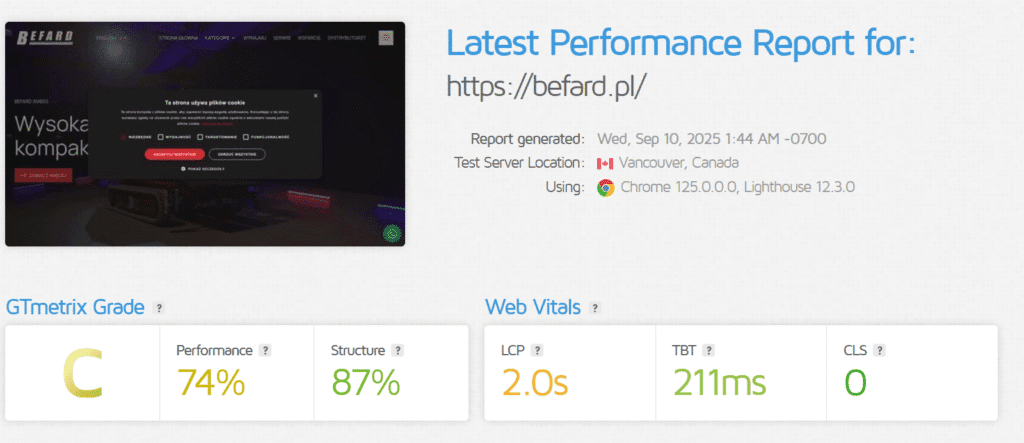
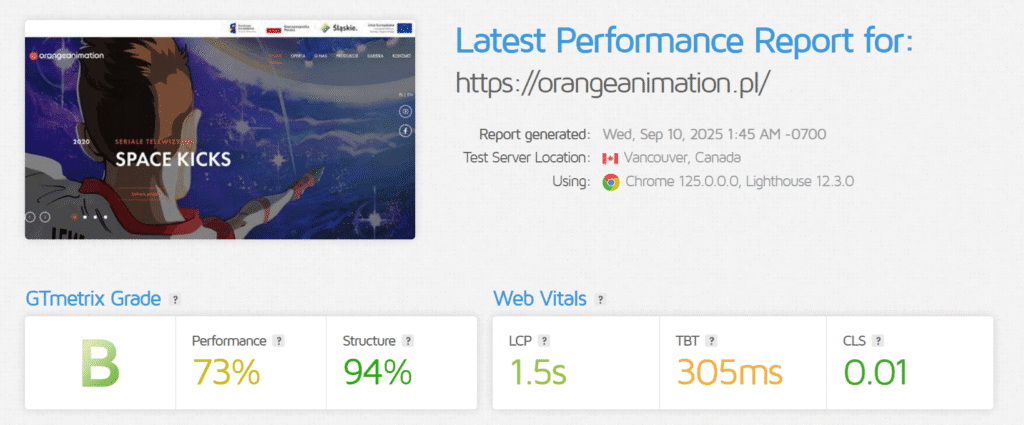
A headless CMS combined with React and Next.js fits these standards perfectly. Thanks to a modern approach to content loading, pages load faster, and users don’t have to wait for images or complex elements to load. What’s more, reports from tools like GTmetrix confirm that solutions based on React and Next.js achieve significantly better results than traditional WordPress-based websites.
It’s not just about a better ranking on Google. It also brings tangible business benefits:
- more visits—higher visibility in search engines means more traffic to the site,
- lower bounce rate—users don’t leave the site because everything runs smoothly,
- higher conversion rates—the faster the site responds, the more likely customers are to stay and make a purchase decision.
In practice, this means one thing: investing in a headless CMS is an investment in a better ranking on Google and tangible sales results.
Better User Experience (UX)

Imagine a customer visiting an online store. They expect everything to work seamlessly: images load instantly, the menu doesn’t lag, and getting to the shopping cart takes just one click. If something goes wrong—if the site freezes or looks outdated—the customer becomes frustrated and often leaves to shop with a competitor.
That’s why User Experience (UX)—the overall user experience—is one of the key elements of an effective website.
Websites built using headless CMS technology, powered by React and Next.js, offer tremendous possibilities in this regard:
- smooth animations and transitions—which make the site more intuitive and visually appealing,
- quick response to user actions—clicks, scrolling, or navigating between pages happen instantly,
- consistency across all devices—whether a customer opens the site on a computer, tablet, or smartphone, everything works just as well.
What does this mean in practice?
- a lower bounce rate—users are less likely to leave the site because they feel it works as it should,
- Longer time spent on the site—an attractive design and ease of use make customers more likely to browse additional pages,
- Higher sales—the easier the site is to use, the greater the chances that a user will become a customer.
In short: Today, UX is not just about aesthetics, but also about tangible business results. A website that is intuitive, fast, and modern builds trust, increases engagement, and drives more sales.
Competitive Advantage and a Unique Approach
The website market in Poland is highly saturated. Most agencies still offer the same thing: WordPress, ready-made templates, and simple implementations. At first glance, this may seem sufficient for small businesses, but in practice, it quickly becomes clear that such a website fails to meet expectations—neither business nor technological.
This is where a headless CMS combined with React and Next.js comes into play. It’s a solution that’s still new on the market and offers a real competitive advantage. Why?
- Modern technology—few companies in Poland today combine React/Next.js website development with refined UX, content creation, and SEO optimization. This rarity is what sets us apart from the competition.
- A comprehensive approach—instead of a “regular website,” the client gets a sales tool that simultaneously supports brand building, lead generation, and business growth.
- Scalability and flexibility – competitors may offer fast websites, but few of them can be easily expanded and adapted to the dynamically changing needs of the market.
The result? The client receives a website that not only looks good but, above all, actually delivers results by increasing sales, improving visibility on Google, and strengthening the brand’s image.
We’re already implementing projects using this technology; examples include websites such as https://befard.pl/, https://vitallclinic.pl/, and https://orangeanimation.pl/. This proves that we not only follow global trends but also effectively implement them in the Polish market.
Summary – Why Choose a Headless CMS?
The world of the internet is changing faster than ever. Just a few years ago, websites based on WordPress and simple templates were the standard. Today, businesses need something more—a tool that is fast, flexible, user-friendly, and ready for future growth.
A headless CMS combined with React and Next.js is exactly the answer to the market’s needs.
- It delivers speed and performance that translate into better Google rankings and increased website traffic.
- It offers a modern user experience that attracts customers and builds their loyalty.
- It ensures flexibility and scalability, allowing the website to grow alongside the business rather than hindering its growth.
- It provides a real competitive advantage by combining the latest technologies with a comprehensive approach to content, SEO, and UX.
In practice, this means one thing: a website based on a headless CMS is an investment in the future of your business. It’s not just a pretty showcase—it’s a tool for sales, marketing, and brand building.
If you want your company to gain a competitive edge in the market and for your website to actually deliver results, now is the time to go with a headless CMS. Our past projects, such as https://befard.pl/, https://vitallclinic.pl/, and https://orangeanimation.pl/, demonstrate that headless technology works in practice and delivers real business results for our clients.
In short: a headless CMS is a future-proof investment. You won’t have to replace your website every few years because it evolves alongside your business.


