Generating sales leads—how to acquire contacts ready to talk


Lead generation is one of the foundations of modern sales. In a market where customers search for information themselves, compare offers, and make purchasing decisions even before their first contact with a salesperson, acquiring a “ready-to-talk” contact requires a planned process. Generating sales leads is not about collecting random email addresses, but about building a system that attracts the right people, qualifies them, and prepares them for an informed purchasing decision.
In this article, we present what an effective lead generation process should look like, which channels are most effective, and how to convert interest into real sales conversations.
You can find more articles like this on our blog – feel free to check it out!
What is lead generation and why quality is crucial

Lead generation is the process of obtaining contact details of individuals or companies potentially interested in an offer. In practice, leads are classified as cold, warm, and hot, depending on their level of readiness to purchase. Effective sales lead generation focuses on those contacts who show real intent and meet specific business criteria.
Lead qualification is crucial. In B2B and B2C environments, a distinction is made between marketing and sales leads. Sales leads are contacts who have not only left their details but also demonstrated behavior indicating a high level of interest in the offer, such as downloading materials, registering for a webinar, or filling out a consultation form.
Generating leads without a qualification system leads to sales department overload and reduced efficiency. Therefore, the process should include both acquiring the contact and evaluating it in terms of its fit with the ideal customer profile.
The foundation of an effective lead generation process
Effective lead generation starts with precisely defining the target group. Defining the ideal customer profile allows you to focus your marketing efforts on people with the highest purchasing potential. Without this step, the contacts you acquire are random and difficult to close.
The next step is to create a valuable proposition that responds to the real needs of your audience. The most commonly used tools are lead magnets, i.e., expert materials, webinars, checklists, or free consultations. Their role is to exchange value: the user receives a specific solution to their problem, and the company receives their contact details.
The website plays an important role in generating leads. Forms should be clear, optimized, and tailored to the stage of the decision-making process. Overly complex forms reduce conversion, while the lack of a clear value message reduces the number of submissions.
Sales lead acquisition channels
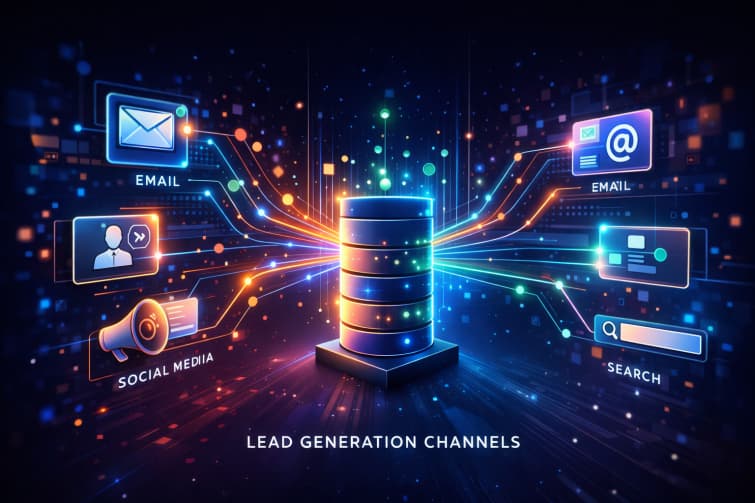
Modern lead generation uses multiple channels simultaneously. The most important ones include:
- Content marketing and SEO. Creating expert content that answers specific user questions attracts organic traffic. People who find a website as a result of searching for a problem are often at an advanced stage of the purchasing decision.
- Paid advertising and performance campaigns. Precise targeting allows you to reach people with specific demographic and behavioral characteristics. Effectiveness depends on matching the message to the user’s intent.
- Email marketing and automation. The systematic delivery of valuable content builds trust and increases willingness to engage in conversation. Automation enables segmentation and personalization of communication.
- Webinars, online events, and consultations. Direct expert contact increases engagement and speeds up the decision to engage in a sales conversation.
- Social media. Industry platforms enable relationship building and identification of people actively seeking solutions.
In practice, the most effective approach is a multi-channel one, in which lead generation is a consistent process covering all points of contact with the customer.
How to convert a lead into a contact ready for a conversation
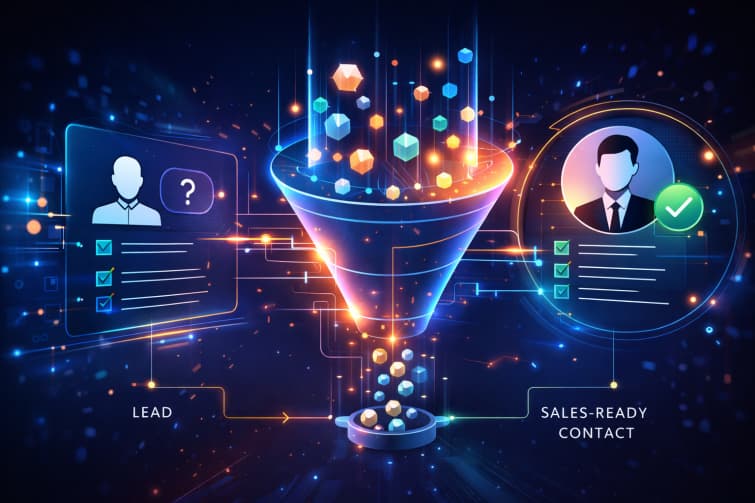
Acquiring data is just the beginning. Generating sales leads requires further work on the relationship. Lead nurturing, i.e., the process of systematically delivering content tailored to the stage of the purchasing decision, is of key importance.
Segmenting your contact database allows you to target different messages to people who are just getting to know your offer and those who are analyzing the details of cooperation. Monitoring user activity allows you to identify when they are ready to talk to an advisor.
It is also important to shorten the response time. Quick contact after filling out the form significantly increases the likelihood of a successful conversation. Automated notifications and integration with the CRM system streamline this process.
Summary
Lead generation is a structured, multi-step process that combines marketing strategy with sales activities. Effective sales lead generation is not based on mass collection of contacts, but on precisely reaching people with high purchasing potential, qualifying them, and consistently building relationships.
The combination of a clearly defined target group, a valuable offer, optimized forms, multi-channel communication, and automation of activities allows you to transform interest into real sales conversations. As a result, lead generation becomes a predictable and scalable system that supports sales growth.


