An effective sales funnel—how to build one that actually generates leads


In 2026, the market no longer rewards companies for their mere presence on the internet. Visibility is not enough. Clicks are not enough. Even high traffic does not guarantee inquiries. What really generates leads is a well-thought-out and strategically designed sales funnel.
It organizes the customer acquisition process. It turns attention into interest, interest into trust, and trust into commercial contact. Without it, marketing becomes a collection of random activities.
You can find more articles like this on our blog – feel free to check it out!
What is a sales funnel today?
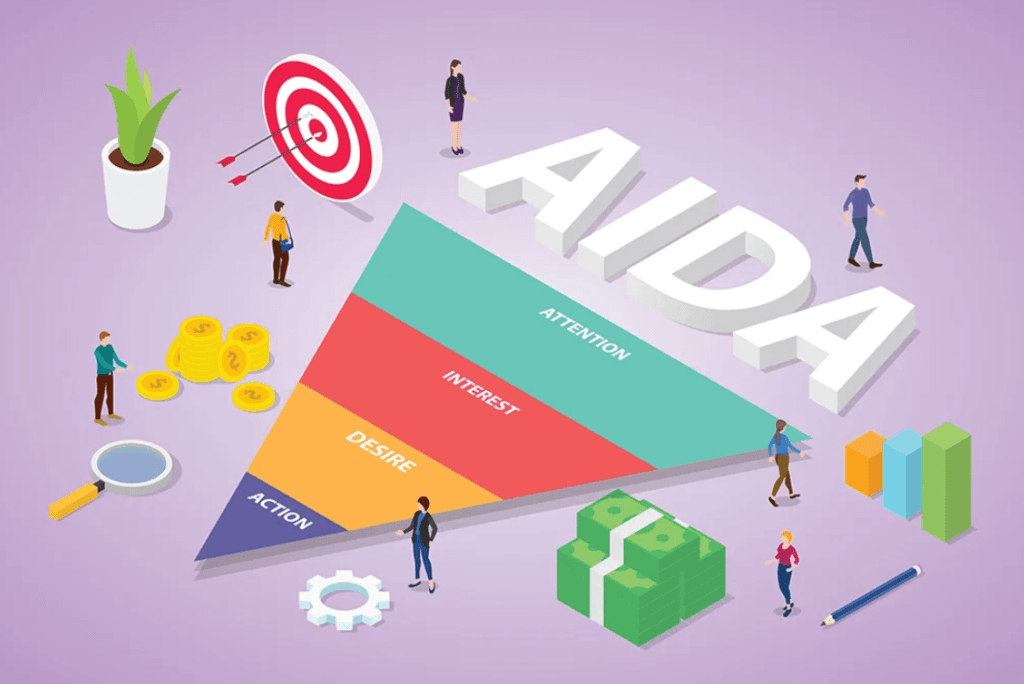
The classic AIDA model, created by Elias St. Elmo Lewis, assumed that customers would go through the stages of attention, interest, desire, and action. The foundation has remained the same, but the way customers move through the purchasing process has changed significantly.
The modern sales funnel is not a linear path. Today’s B2B and B2C customers independently analyze the market, compare offers, read expert content, watch videos, check reviews, and return to the brand several times before deciding to make contact.
This means that the sales funnel must be a multi-point system. The website, advertising campaigns, content marketing, automation, and sales process must work together cohesively. Each stage must have a clearly defined goal.
Why doesn’t traffic translate into leads?
Many entrepreneurs invest in advertising and SEO, hoping that an increase in visits will automatically increase sales. The problem is that users who visit a website often do not find answers to their questions or reasons to leave their contact details.
Gartner research shows that customers spend a significant part of the purchasing process doing their own research before deciding to talk to a supplier. HubSpot reports indicate that companies that systematically build conversion paths and tailor their communication to the decision-making stage achieve higher lead generation rates.
A lack of structure causes users to leave the site without taking action. The sales funnel is designed to create this structure.
The foundation of an effective sales funnel
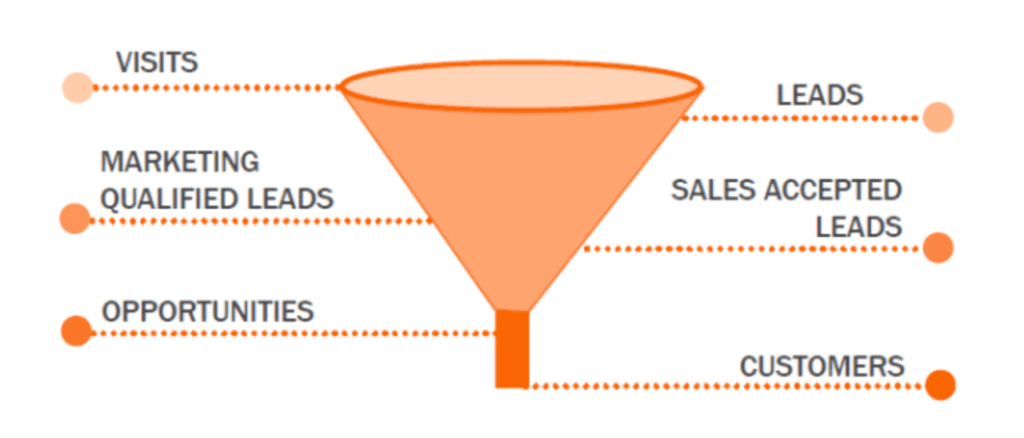
An effective sales funnel starts with analysis. Not with a campaign, not with a contact form, not with a landing page. First, you need to understand who the customer is and what problem they are coming with.
McKinsey & Company reports on the decision-making path show that brands win when they deliver the right content exactly when the customer needs it. This requires mapping the customer journey and identifying decision-making barriers.
Only on this basis can you design communication, offers, and contact capture mechanisms.
Top of the funnel – attracting the right audience
The first stage of the sales funnel is building awareness and expertise. At this level, the customer is not yet ready to buy. They are looking for information, analyzing the problem, comparing approaches, and trying to understand the available solutions.
Companies that consistently invest in substantive content, market education, and real answers to customer questions generate more inquiries than those that only communicate their sales offer. Education builds trust, and trust is currency in the B2B process.
At this stage, the sales funnel should attract the right traffic through expert content, blog articles, video materials, and industry reports. This is the moment when the brand ceases to be an anonymous supplier and begins to be a source of knowledge. And that’s when the foundation for a future lead is laid.
Middle of the funnel – capturing contact
This is the moment when interest must be converted into action. The user is already aware of the problem and is considering various solutions. At this point, the sales funnel should offer value in exchange for data.
This can be a consultation, audit, analysis, demo, or access to premium material. It is crucial that the offer is a natural extension of the content previously consumed by the user.
Personalization of communication and integration of marketing and sales have a direct impact on the quality of leads. Leads generated without a further relationship maintenance process quickly lose their value. Therefore, an effective sales funnel must be supported by automation and contact segmentation.
Bottom of the funnel – decision and closure
At the final stage, the user needs evidence. Case studies, customer reviews, concrete results, and a transparent offer reduce the decision-making risk.
The vast majority of customers analyze reviews before entering into a partnership. The sales funnel must therefore provide social proof.
This is where marketing and sales must work as one. Inconsistent communication can undermine previous efforts.
How to measure the effectiveness of the sales funnel?
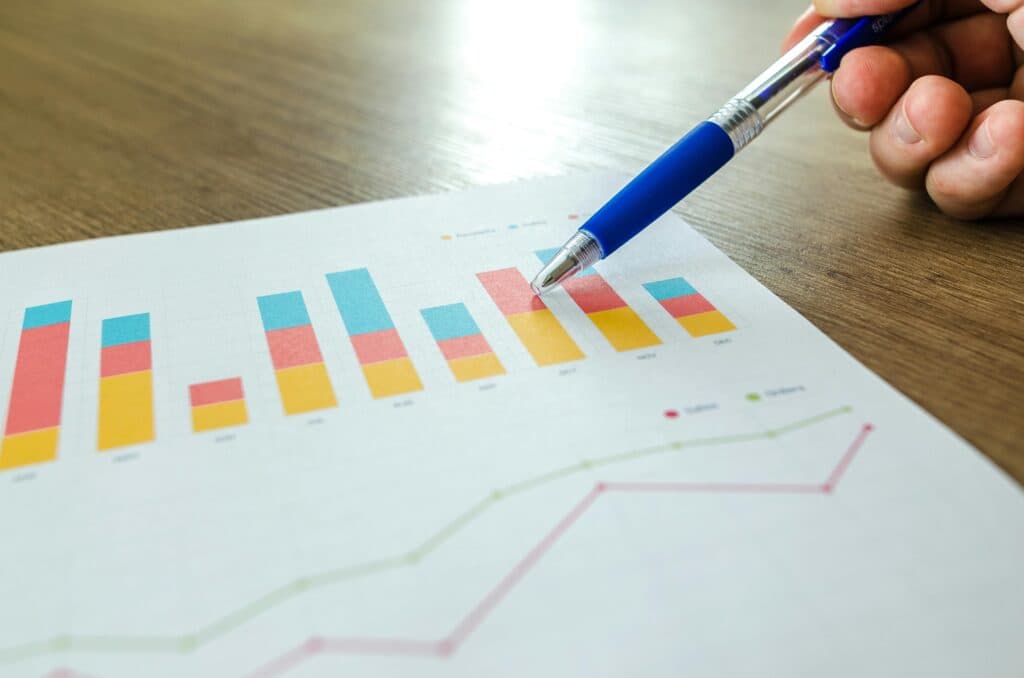
A sales funnel without analytics is just a concept. It is necessary to monitor the cost of acquiring a lead, the conversion rate at each stage, the time it takes to go through the funnel, and the quality of leads as assessed by the sales department.
Companies that integrate marketing and sales data achieve better conversion rates and a higher return on investment. Continuous optimization, testing of messages, and analysis of user behavior are the elements that distinguish a working funnel from a theoretical one.
The sales funnel in 2026 – the role of automation and AI
In 2026, the sales funnel will increasingly be based on data and automation rather than manual processes. Artificial intelligence supports user behavior analysis, lead scoring, and purchase readiness prediction. This allows the sales department to work on contacts with real potential rather than random inquiries.
A modern sales funnel also enables large-scale personalization of communication. Content and offers can be tailored to the stage of the purchasing process, industry, or user interaction history. This means that the path is no longer uniform for everyone, but responds flexibly to the behavior of a specific person.
At the same time, technology remains a tool, not a foundation. Automation only increases effectiveness if the sales funnel has been properly designed strategically beforehand. It is the combination of strategy, data, and tools that determines the real quality of the leads generated today.
Summary
An effective sales funnel is a designed lead generation system, not a one-time advertising campaign. It is based on understanding the customer, tailored communication, valuable content, and consistent cooperation between marketing and sales. Each stage of the funnel has a specific function and a clearly defined business goal. From attracting the right traffic, through building trust, to the moment of decision and contact with the sales department.
In 2026, the winners will be companies that treat the sales funnel as a continuous process, not a project to be checked off. They test messages, analyze data, optimize conversion rates, and regularly verify the quality of generated leads. They understand that effectiveness does not come from a single campaign, but from a consistently built system that responds to market changes and customer behavior.
A well-constructed sales funnel organizes marketing activities, giving them logic and predictability. It allows you to plan growth based on data rather than intuition. It minimizes randomness, shortens the customer’s decision-making time, and increases the effectiveness of the sales team. Most importantly, it allows you to scale your activities without losing lead quality.
If marketing is to be a real tool for growth rather than an operating cost, the sales funnel must be treated as a strategic infrastructure of the company. It determines whether market interest will be converted into specific inquiries and long-term business relationships.


